
Building at the Intersection
What happens when a product manager stops just managing products and starts building them—with AI agents as collaborators?
These projects explore the convergence of product management and AI development. From a multi-agent PM assistant to a cuneiform reader, each one tests a different hypothesis about how humans and AI can build together.
The spectrum below runs from AI-native systems (where AI agents are the product) through AI-assisted experiments (where AI compressed months of work into days) to traditional products (built before the agent era). The contrast tells the story.
Flagship Projects
Piper Morgan
Active
The multi-agent system I operate daily — I don't just advise on integrating AI, I built my own agentic tool specifically for product work.
A multi-agent AI product management assistant with 57 service modules, 6,300+ tests, and a 19-role agent team that includes architects, strategists, testers, and a communications director. Features knowledge graphs, ethics enforcement, floor-first conversational routing, and 63 architectural decision records documenting every design choice. Built in public with 280+ blog posts.
"11 active roles, 63 architectural decisions, over a year of running it in production — the same operational discipline any client engagement gets, not theory about what AI agents could do."
— Building Piper Morgan
Klatch
Active
Five named agents wrote most of the code, under their own git identities. I can show you exactly which commits.
A working record of directing a multi-agent AI team, not a pitch for adoption: five named agents (Calliope, Daedalus, Theseus, Argus, Iris) have authored 800+ of the ~2,000 commits on main since March 2026, each under their own scoped git identity, across 12 tagged releases and roughly 1,600 passing tests. Built on a five-layer prompt architecture with Agent Experience Testing (AXT) — a methodology for diagnosing what agents actually retain after context transitions, not just what they claim to. The app (local-first, Panel/Roundtable/Directed multi-agent conversation modes) is real and working; the commit log is the artifact worth inspecting.
"The interesting question isn't whether AI can use context — it's whether it knows it has context. AXT testing revealed that structurally delivered information can be functionally accessible yet source-unattributable."
— Klatch Blog — What Doesn't Transfer
Vibe-Coded Experiments
Rapid prototypes built in days, not months. Each one started as a creative itch and became a case study in what AI-assisted development makes possible.
Dynamic Atlas
Active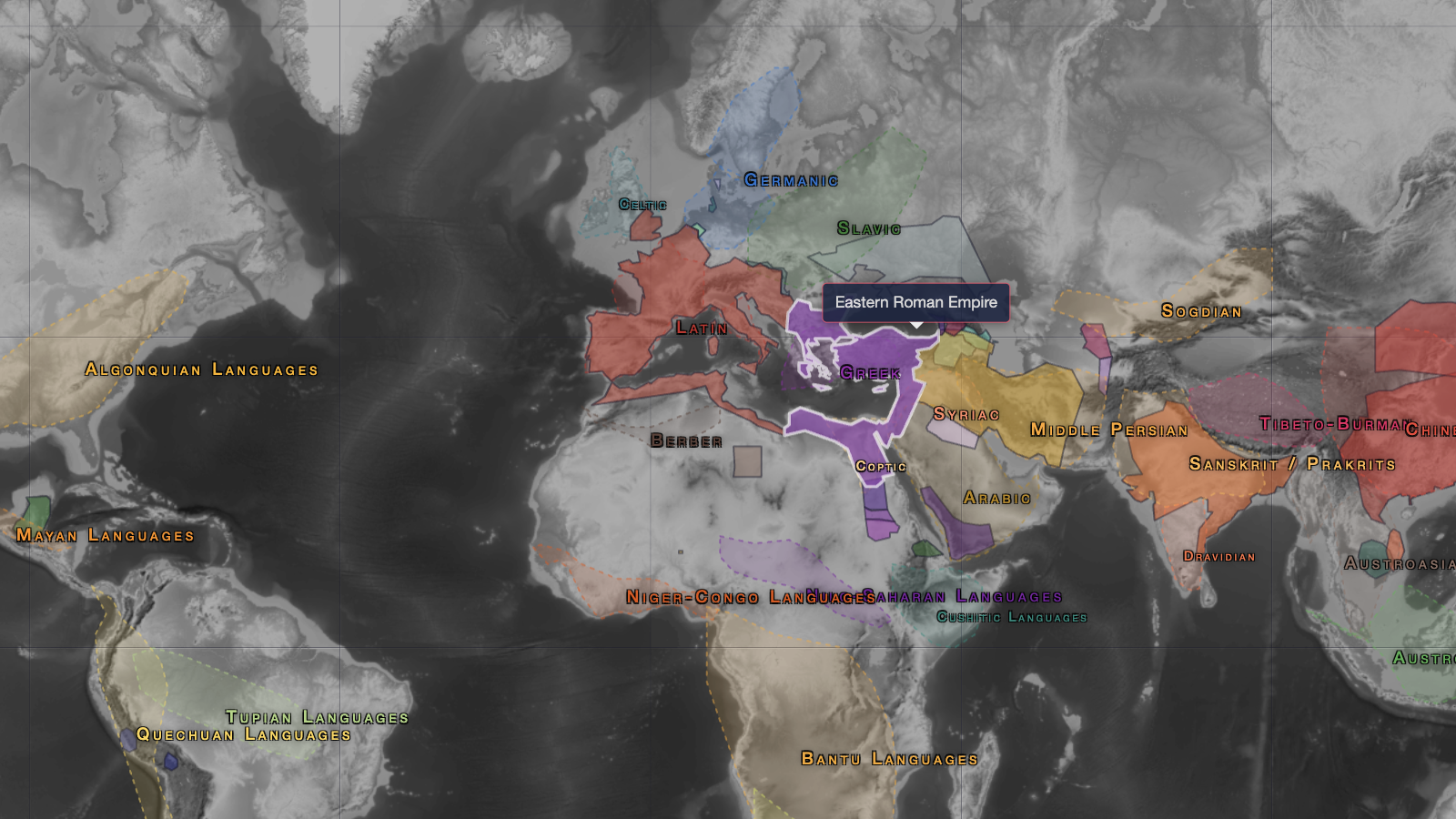
2,500 years of empires, religions, languages, and trade routes—animated
An interactive animated web map visualizing the rise and fall of 1,210+ political entities from 500 BCE to 1453 CE, with religion, language, and trade route overlays. Features a custom polygon morphing engine for smooth territorial transitions. A dream first pitched to Macromedia circa 1992, now finally buildable with AI.
"A 30-year dream, finally buildable—because AI collapses the skill gap between vision and implementation."
— Dynamic Atlas Roadmap
Tectonic Globe
Complete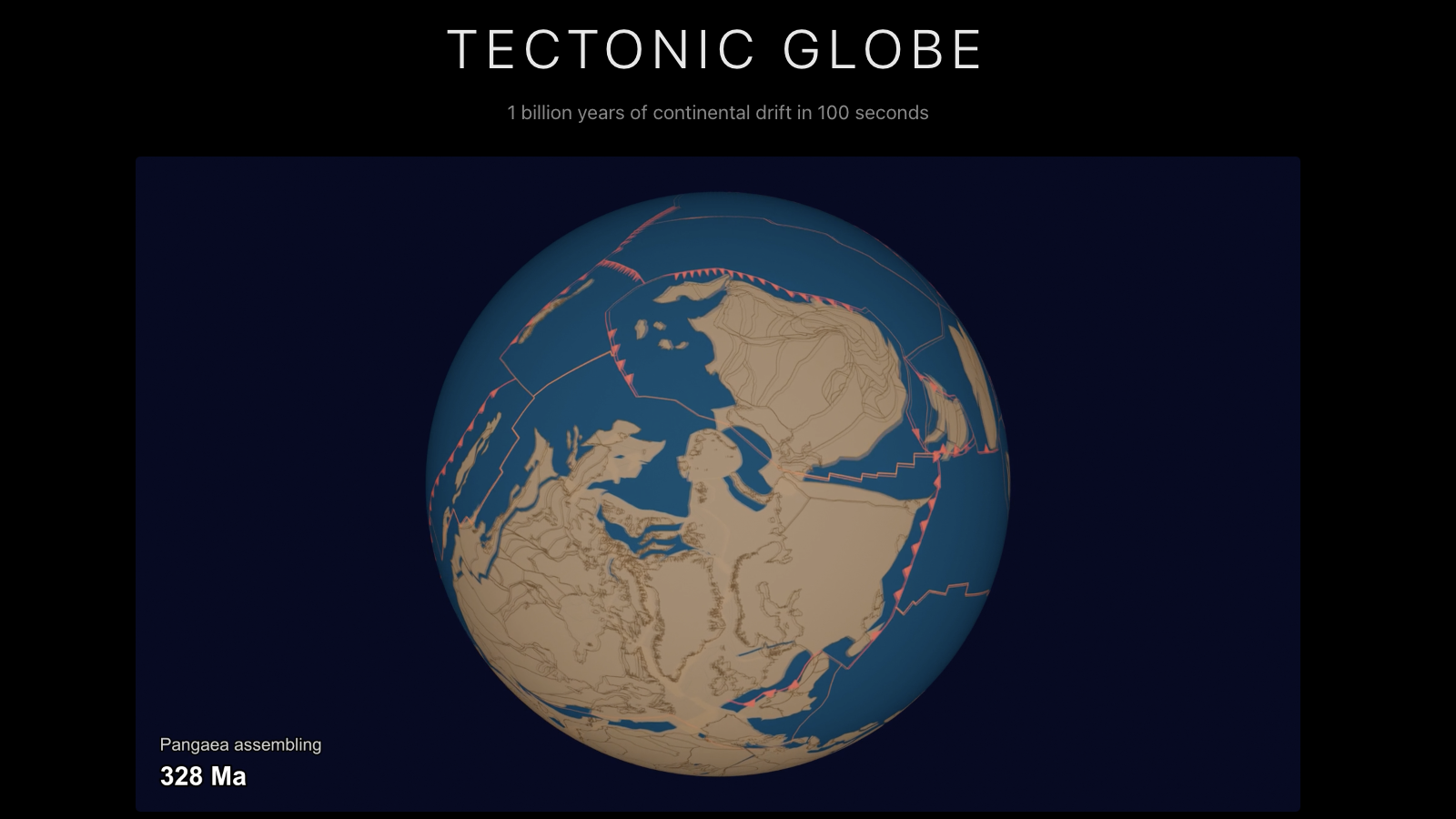
One billion years of continental drift in 101 seconds
A 3D animated visualization of Earth's tectonic plate history at 1-million-year resolution. Uses Union-Find clustering to track the largest landmass across geological time, variable pacing that slows for supercontinents, and Blender Cycles path-traced rendering. Six versions in four days.
"The most impactful improvement wasn't a clever algorithm—it was just generating more data. The jump from 5 Ma to 1 Ma resolution was a one-line change that transformed everything."
— Tectonic Globe README
Cuneo
Active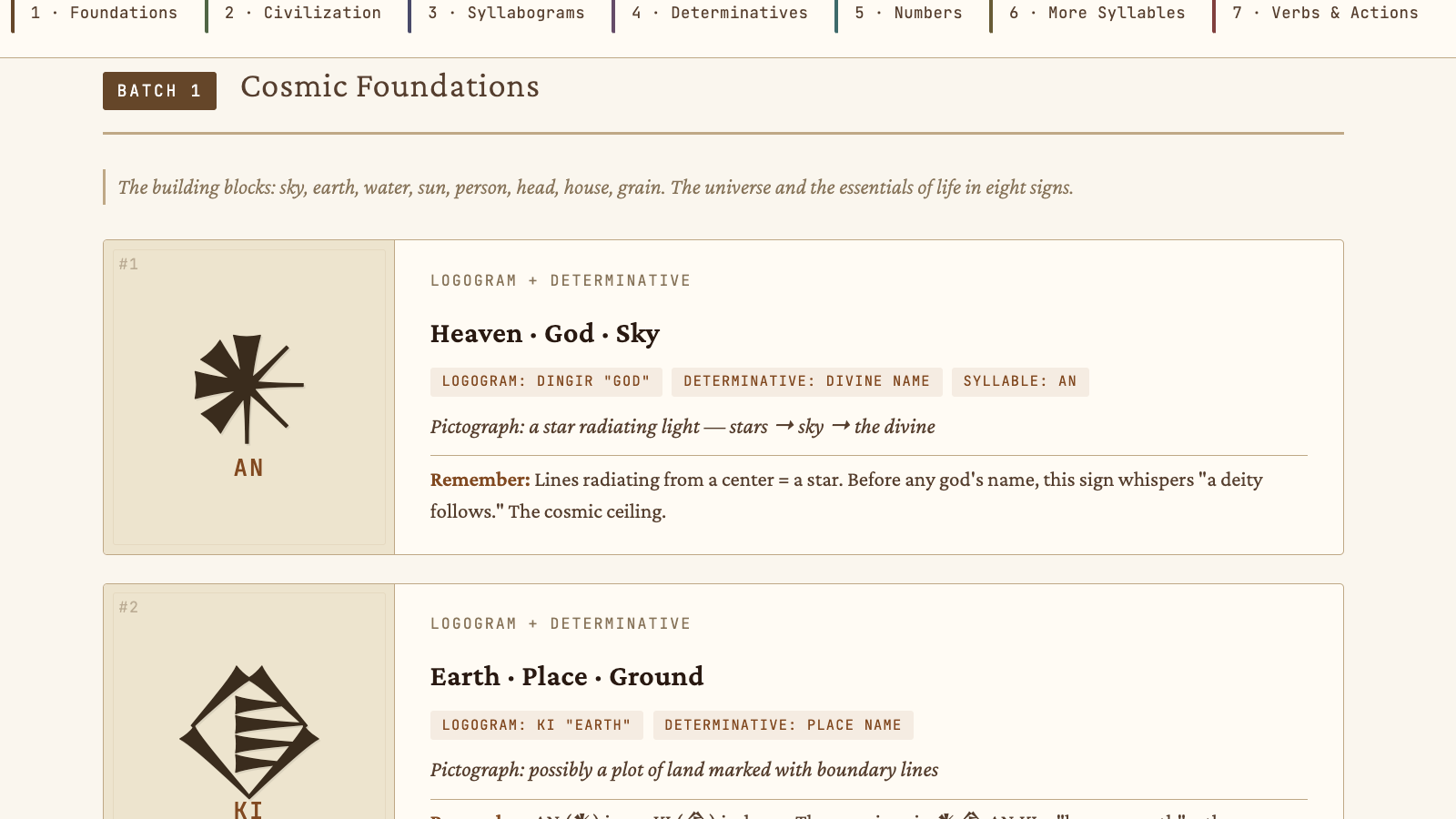
Cuneiform for the casual learner
A single-page educational tool teaching 51 cuneiform signs across 7 thematic batches, from Cosmic Foundations to common verbs. Features a Mesopotamian clay-tablet aesthetic, progressive curriculum design, Unicode-verified accuracy, and zero JavaScript—pure HTML and CSS with Noto Sans Cuneiform rendering.
"AI as research partner: Unicode verification, scholarly accuracy, beautiful pedagogy—all in one session."
— Cuneo CLAUDE.md
Weather
Active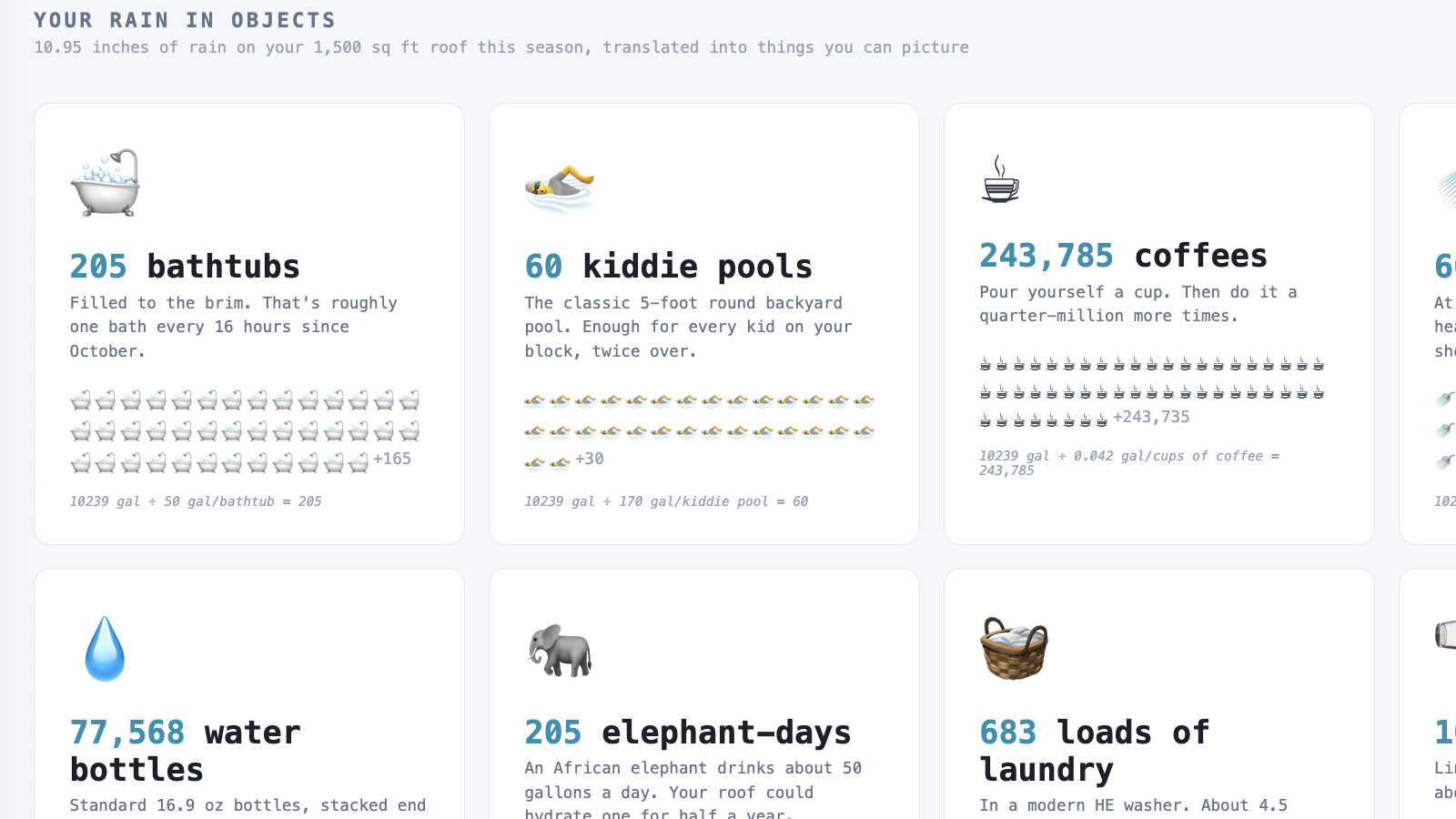
Eight ways to look at rain
A NOAA rainfall tracker for Palo Alto with a Python CLI and 8 interactive web visualizations: GitHub-style heatmap, cumulative curves, storm power rankings, drought streaks, weekend rain bias, rhythm sparklines, an animated fill gauge, and "Your Rain in Objects" (how many bathtubs did it rain?). Light and dark themes.
"AI makes 'one more sketch' nearly free—so you end up with eight delightful visualizations instead of one adequate one."
NYT Crossword Relay
ActiveA daily puzzle that finds you wherever you are
A personal pipeline that polls the NYT Crossword each morning, renders it for print, and delivers it to a reMarkable tablet—with a status page and a travel-aware relay so the puzzle reaches you whether you're home or on the road. AppleScript, bash, Python, and a pair of LaunchAgents. Not productized; the point is that it works for one person every day.
"AI makes it worth building the one-person tool you'd never otherwise justify the time for."
Focused Products
Standalone products with clear value propositions—one built with AI methodology, one built before it.
One Job
Active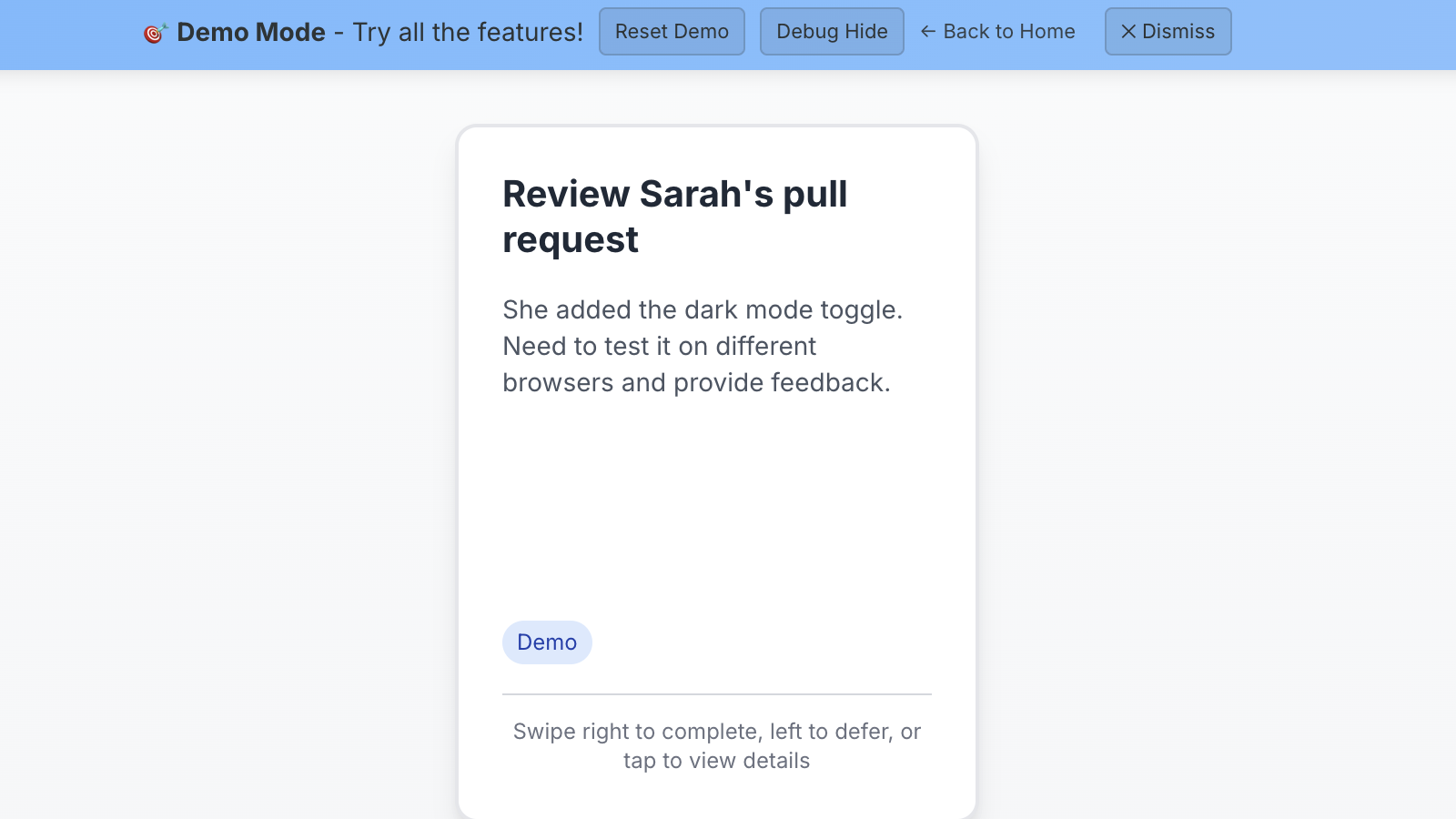
See one task. Do one task. Feel accomplished.
A psychology-backed single-tasking app with a Tinder-like swipe interface. Swipe right to complete, left to defer. Supports nested sub-stacks for breaking big tasks into smaller ones. Built with systematic Claude Code methodology including TDD zones and the Excellence Flywheel approach. The public site has since grown a Philosophy page, an open roadmap, an interactive Playground, and pricing — the product's thinking made visible, not just the app.
"What actually unblocks a ten-month-stalled project? Not more time — a fresh agent instance reading the whole history and naming, in one sitting, the blocker every prior pass had stepped around."
— Coral, One Job's resident agent
OptiListen
Shipped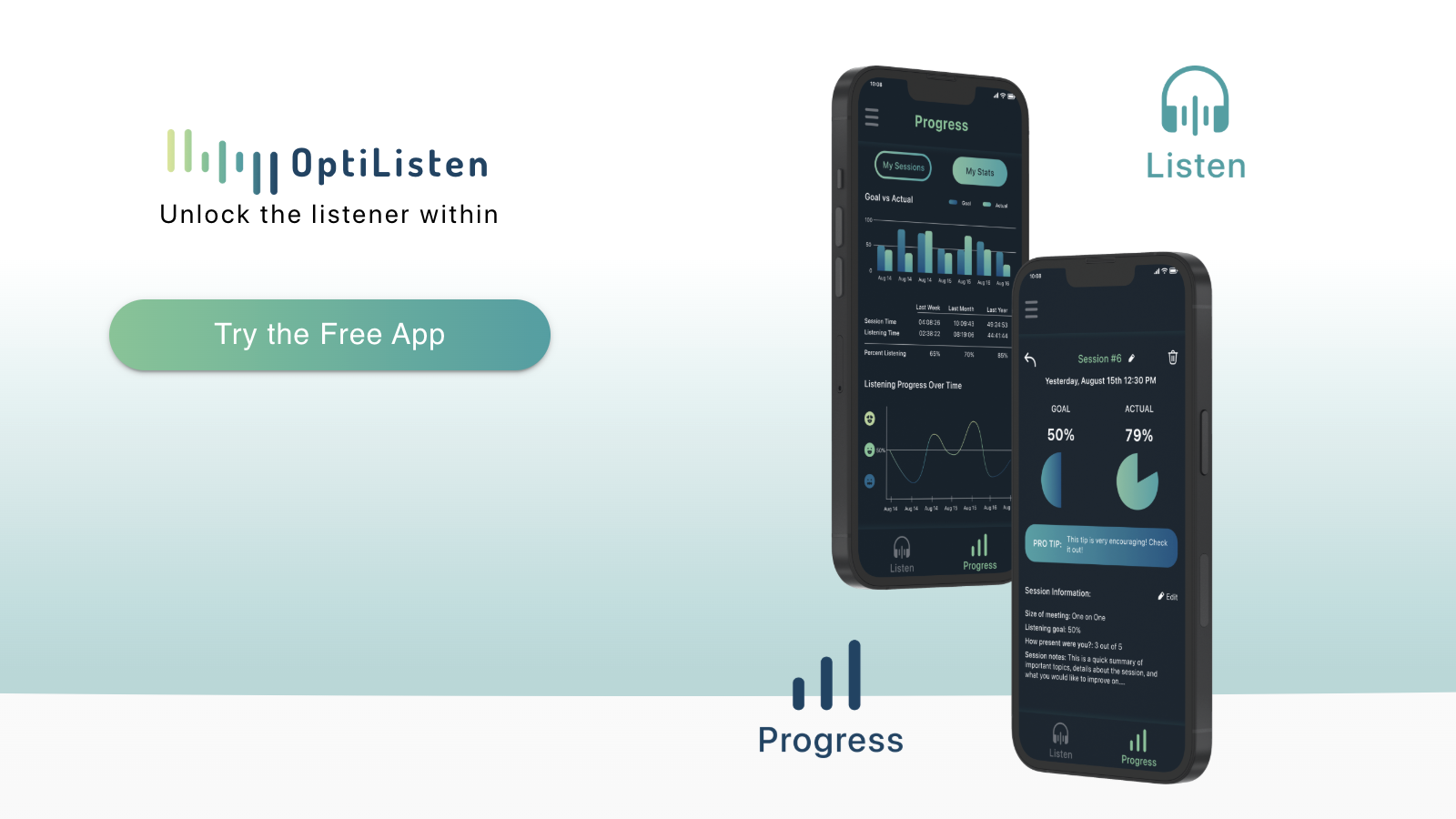
Unlock the listener within
An iOS app that helps you become a better listener by tracking how much you speak during audio and video calls. Set a goal, start a session, and see how you do. All data stays on your phone. Built with Dan Brodnitz—the pre-AI baseline in this portfolio, showing what focused product work looks like without agent assistance.
"The pre-AI baseline: a focused product built the traditional way. The contrast with everything above tells the story."
Infrastructure & Process
The systems that make the other systems work. Meta-layer tooling for agent coordination, knowledge sharing, and keeping the ecosystem coherent.
Cross-Pollination Hub
ActiveAI agent teams briefing each other — automatically
A daily automated intelligence sweep across active AI agent projects. Three scheduled triggers produce daily briefs, weekly digests, and external intel scans. An LLM reads commits, session logs, and architecture documents from multiple repos, identifies cross-relevant insights, and publishes structured briefs. External advisors like Ted Nadeau contribute convergent research that gets routed to the right teams. This is the meta-layer — AI agents coordinating AI agents.
"The interesting question isn't what each agent team learned — it's what each team should know about what the other learned. That requires a third mind."
— Janus, March 2026
Interested in how AI-assisted development can transform your product practice?